





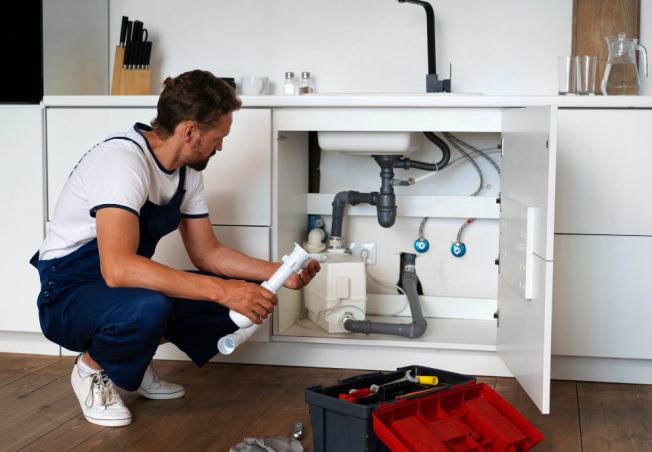
You hear it at midnight. Drip. Drip. You promise you’ll “deal with it this weekend,” then life happens. I get it. But this is where I have come to know that that small drip is an ear-piercing alarm in all the kitchens and bathrooms in Orange County. It is able to leave sinks stained, cabinets swollen, moulds grow, and silently increases your monthly water bill. Better still, the longer it is, the more the inner parts eat themselves up. I wish leaks were harmless. They aren’t. Let me, as a plumbing handyman, show you what we see in the field and what you can do today.
“If you can hear it at night, your water bill can feel it at month-end.”
What That Drip Really Means
A faucet isn’t leaking “for no reason.” It’s usually one of three things: a worn rubber washer, a tired cartridge, or a loose packing nut. Each drip drags minerals through the valve, scratching parts like sandpaper. Leave it, and you go from a $5 washer to a full-on faucet replacement or swelling countertop. I’ve opened bases where the wood crumbled like toast. No one plans for that. It happens slowly… then all at once.
Stories From Real Homes
In practice, we noticed that “small” leaks spike in summer. One family kept a slow drip for “a couple months.” Their bill was up $40. A quarter-turn cartridge and seat cleaning fixed it in 25 minutes.
From my experience, the worst damage isn’t the sink – it’s below. A powder room in Irvine had a drip that ran down the spout, under the flange, and behind the vanity. We found soft drywall and a fine stripe of mold. The faucet repair was $120. Drywall and repaint? Much more. That’s the math of waiting.
Quick Checks You Can Try Today
Before you grab tools, take a breath. These are fast, low-risk steps I use on calls to see if the leak is a simple tweak or something that needs parts. If anything feels stuck, stop – forcing it can crack a valve.
- Gently tighten the handle’s small cap nut (don’t overdo it).
- Kill the water at the shut-offs under the sink.
- Pop the handle off. Give the packing nut a tiny snug – an eighth turn. Stop if it fights you.
- Two handles (hot/cold)? That’s a compression faucet. Swap the rubber washer.
- One handle? Find the model and replace the cartridge.
- Before reassembling, open the shut-offs for a second to flush the valve seats. That blast clears grit that keeps making the drip come back.
Tiny Fixes vs. Big Bills: When to Call a Pro
Call when the faucet brand is unknown, the handle is stiff, or there’s water under the sink. Also, call if the shut-off valves won’t turn – forcing them can break a line. A local handyman near me who knows faucets can save your Saturday and your base cabinet. Need deeper help with valves, supply lines, or shut-offs? A seasoned plumbing handyman has the parts, seats, and pullers in the truck – no “three trips to the store” saga.
Simple Life Hacks That Actually Help
These are the quiet habits that keep drips from turning into weekend projects. None of them are fancy, but together they prevent 80% of the “how did this get so bad?” calls we see.
- Add a mesh aerator screen and clean it every few months.
- Put a dry paper towel in the cabinet; check for spots in the morning.
- Hard water? Use a faucet brand with easy-swap cartridges (we can point you to options).
- Write install dates under the sink with a marker. Future you will thank you.
The Bottom Line
I wish I could say a drip is “no big deal.” Sometimes it is… for a week. Then it starts costing real money and stress. If you’re handy, try the light fixes above. If you’re unsure – or you hear that drip at 2 a.m. and feel a tiny flash of dread – bring in help. We’ve fixed hundreds like yours, fast and clean. Send a request, call, or text us today. We’ll stop the drip and leave you with quiet nights again.