





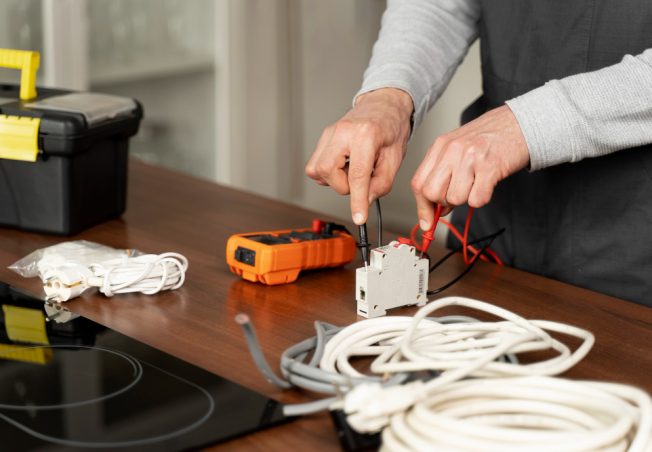
You flip a breaker, grab a screwdriver, and think, “How hard can a light switch be?” I get it. I’ve stood in that hallway with the power off, sweating over a buzzing switch that “should be simple.” Here’s the thing: electricity doesn’t forgive guesses. One sloppy connection can melt a wire behind drywall and smolder for hours. In our team at Fixi, we’ve seen proud weekend wins turn into weekday panics. This isn’t gatekeeping; it’s a friendly warning from folks who fix this stuff daily – and who’ve made mistakes, learned, and carry the scars.
“But I Watched a Video – How Hard Can It Be?”
From my experience as an electric handyman, the video never shows the house where colors were mixed, grounds cut short, or neutrals shared in a weird way. Real homes surprise you.
“I thought swapping a switch was a 10-minute win. Then the hallway lights flickered, the bathroom fan squealed, and the GFCI wouldn’t reset.”
– A Santa Ana homeowner we helped last fall
In practice, we noticed the fan and lights were piggybacked across two circuits. The DIY swap tied neutrals together. It worked – until it didn’t. The fix meant tracing the run, separating neutrals, and replacing a heat-baked backstabbed outlet. Cheap job became a real job.
Real Cases From Homes in Orange County
These are real fixes from real houses in OC – no theories, just the messy stuff we walk into every week.
- Warm outlet by the sofa. Backstabbed receptacles running a space heater. The plastic was browning. We moved to screw terminals, tightened up, and added an AFCI breaker.
- Garage fridge on a GFCI daisy chain. Every time the freezer kicked on, the GFCI tripped. We put it on a dedicated circuit with the right protection. Food saved.
- DIY oven on an undersized breaker. It “worked”… until Thanksgiving. Breaker kept popping because the wire gauge was wrong. New run, right breaker, happy pies.
- Mixed aluminum and copper. Twist caps only. That joint loosened and arced. We used AL/CU rated connectors and anti-oxidant. No more sizzle.
What Can Go Wrong (Fast)
These are the failure patterns we see most after DIY wiring – quiet at first, then harsh.
- Shock that drops you off a ladder
- Hidden heat, then a quiet fire
- Failed home inspection when you sell
- Insurance headaches after a claim
- Hours lost chasing a mystery trip
What Will a Pro Do That You Can’t? (And When to Pick Up the Phone)
Quick version: pros plan, measure, and prove; guessing is how fires start. If you’re weighing DIY vs help, here’s the line you shouldn’t cross.
How a Pro Works
We calculate load before touching a wire – panel capacity, breaker size, wire gauge, and startup surge. We pull permits when required, meet the inspector, and pass clean. We choose the right protection – GFCI near water, AFCI in living areas – and follow current code. Then we test with pro meters, document the work, label everything, and stand behind it with a real warranty.
When to Pick Up the Phone
Call when lights dip as the microwave or AC starts, outlets feel warm or smell “electrical,” breakers trip twice, two-prong receptacles linger, switches or panels buzz, or you uncover a junction box buried in a wall. That’s your stop sign – bring in a local handyman and let us make it safe.
Bottom Line (and a Friendly Nudge)
DIY is great for paint, shelves, and yard work. Electricity is different. It can be quiet, then cruel. If your gut feels wobbly, listen to it. Our handyman team works Orange County homes every day; we’ve likely fixed your exact problem on your street. Let us keep your family safe while you keep your weekend. Submit a request, contact us for services, or read more on our site – we’re happy to check your panel, outlets, and lights today.